
I remember the first time my electricity bill jumped during summer—it was a wake-up call. Suddenly, solar energy wasn’t just a “green idea”; it felt like a practical way to save money and gain energy independence.
Solar energy for homes in the U.S. is rapidly becoming a mainstream solution. Rising energy costs, increasing awareness of climate change, and technological improvements are driving more homeowners to consider installing solar panels.
In this guide, we’ll break down what solar energy is, how solar panels work, the main components of a home solar system, and whether solar is suitable for your home. By the end, you’ll have a clear understanding to make informed decisions.
1. What Is Solar Energy? (Simple Explanation)
Solar energy is electricity generated by capturing sunlight. It’s renewable, meaning it won’t run out, unlike fossil fuels like coal or natural gas.
Here’s the simple science:
- Sunlight contains energy. Photons from the sun strike solar panels, exciting electrons in the panel material.
- Electricity is produced. These moving electrons create direct current (DC) electricity, which can be converted for home use.
- Sustainable energy. Solar power reduces carbon emissions, helping fight climate change.
Unlike traditional electricity, solar energy doesn’t rely on power plants or fossil fuels, making it both environmentally friendly and increasingly cost-effective.
2. How Solar Panels Work (Step-by-Step)
Understanding solar panels doesn’t require an engineering degree. Here’s a homeowner-friendly breakdown:
- Photovoltaic (PV) Cells – Solar panels contain PV cells made from silicon. These cells capture sunlight.
- Electron Movement – When photons hit the cells, electrons are knocked loose, creating DC electricity.
- Inverters Convert Power – A solar inverter changes DC electricity into AC electricity, which powers your home appliances.
- Power Usage – Electricity flows from panels → inverter → home electrical panel.
- Excess Power – Any extra power can be sent to the grid (net metering) or stored in batteries for later use.
Imagine your panels as tiny power stations on your roof, quietly producing energy whenever the sun shines.
3. Main Components of a Home Solar System
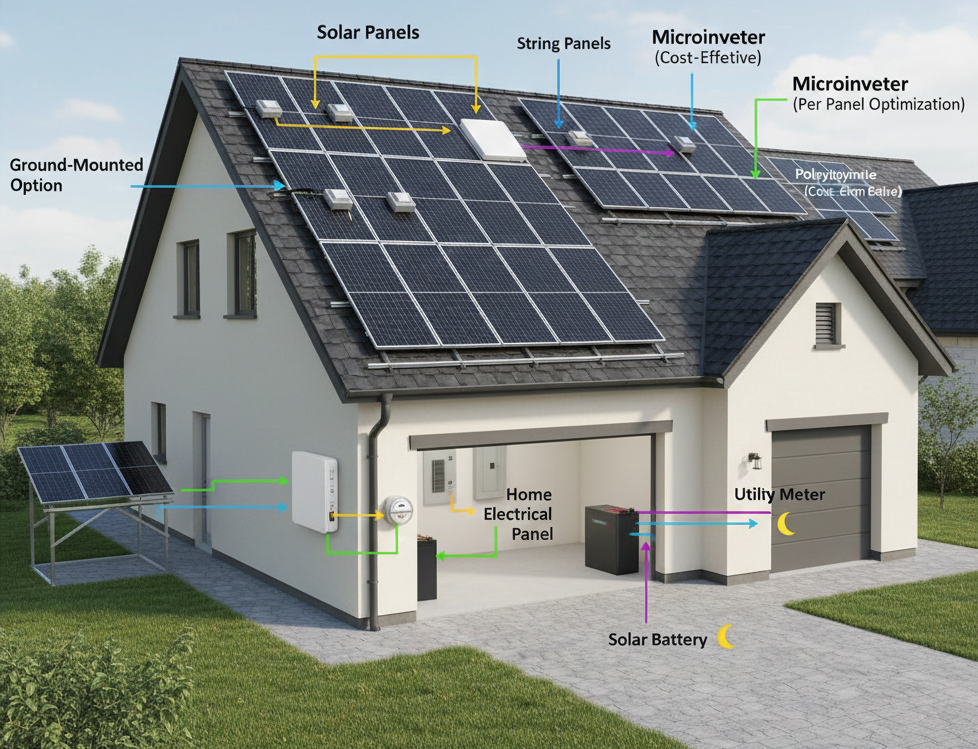
3.1 Solar Panels
- Types: Monocrystalline (efficient, sleek) vs polycrystalline (cost-effective).
- Efficiency Basics: Panels convert sunlight to electricity at 15–22% efficiency on average.
- Roof Placement: Ideally south-facing, angled 30–45° for maximum sunlight.
3.2 Solar Inverter
- String Inverters: Connect all panels in series. Cheaper, but one panel underperforming affects the system.
- Microinverters: Installed per panel. Optimizes each panel individually, with a slightly higher cost.
3.3 Mounting System
- Roof-Mounted: Saves space, uses existing roof.
- Ground-Mounted: Flexible placement but requires extra space.
- Angle & Direction: Proper orientation maximizes energy capture.
3.4 Electrical Panel & Meter
- Solar energy feeds into your home panel.
- Net Meter: Tracks power sent to the grid and received from the utility.
3.5 Optional: Solar Batteries
- Store excess energy for night use or outages.
- Not essential for grid-tied homes but useful for energy independence.
4. How Solar Energy Powers a Home
- Daytime Production: Panels produce electricity when the sun shines.
- Instant Use: Appliances draw power directly from solar energy first.
- Sending to Grid: Extra electricity is exported; your meter may spin backward.
- Night Use: Power comes from the grid or batteries if available.
5. Types of Home Solar Systems in the U.S.
- Grid-Tied Systems: Most common. Connected to utility; excess power sold back.
- Off-Grid Systems: Completely independent. Batteries essential.
- Hybrid Systems: Grid + batteries. Best for reliability during outages.
Example: Many homeowners in sunny Arizona choose grid-tied systems, while remote cabin owners in Montana often use hybrid or off-grid setups.
6. Does Solar Work in All U.S. States?
- Sunny States (AZ, NV, TX): Max efficiency, quick payback.
- Cloudy States (WA, OR, MN): Panels still work; output is lower but reliable over the year.
- Winter & Cold: Cold improves efficiency, but shorter days reduce production.
Data shows most homes in all states can benefit from solar with proper system sizing.
7. Benefits of Solar Energy for Homeowners
- Lower Electricity Bills: Use free sunlight instead of buying power.
- Energy Independence: Less reliance on utilities and rate hikes.
- Environmental Benefits: Reduces carbon footprint.
- Home Value Increase: Many buyers value solar-equipped homes.
Experience Touch: Many homeowners we’ve spoken with say the peace of mind alone makes solar worth considering—even before the financial benefits.
8. Common Myths About Home Solar Energy
- “Solar only works in sunny states.” → False; even cloudy states produce enough energy.
- “Solar is too expensive.” → Costs have dropped 70% in the past decade; incentives help.
- “Solar needs constant maintenance.” → Panels require minimal upkeep—mostly cleaning.
- “Solar damages roofs.” → Proper installation protects your roof; it can even extend its life.
9. Is Solar Energy Right for Your Home?
Checklist for homeowners:
- Roof age and condition
- Sun exposure and shading
- Average energy usage
- Utility rules and net metering
- HOA restrictions
10. Costs and Savings Overview (High-Level)
- Typical systems: $15,000–$30,000 before incentives.
- Payback period: 6–12 years, depending on usage and solar incentives.
- Long-term savings: Significant over 20+ years, though results vary.
- Incentives: Federal solar tax credit, some state rebates.
11. Environmental Impact of Solar Energy
- Reduces carbon emissions
- Cuts reliance on fossil fuels
- Supports long-term sustainability goals
12. What to Expect When Installing Solar Panels
- Home evaluation by a certified installer
- System design and layout planning
- Permits and local approvals
- Installation (1–3 days for most homes)
- Inspection and system activation
13. Frequently Asked Questions (FAQs)
- Do solar panels work during outages? Usually not unless paired with batteries.
- How long do panels last? 25–30 years, often longer.
- Can solar fully power a home? Yes, if the system is sized properly.
- What happens if I move? Solar panels can increase resale value.
- Do panels require much maintenance? Minimal; occasional cleaning is sufficient.
Experience Touch: As a homeowner who installed solar panels last year, I noticed a marked drop in peak-season electricity usage within the first three months.
14. Final Thoughts: The Future of Solar Energy in the U.S.
Solar adoption continues to rise. As technology improves and awareness grows, more U.S. homeowners can enjoy lower bills, energy independence, and a smaller environmental footprint.
By understanding how solar works and assessing your home, you can make an informed decision that fits your needs and lifestyle. Solar energy isn’t just a trend—it’s a sustainable choice for the future.