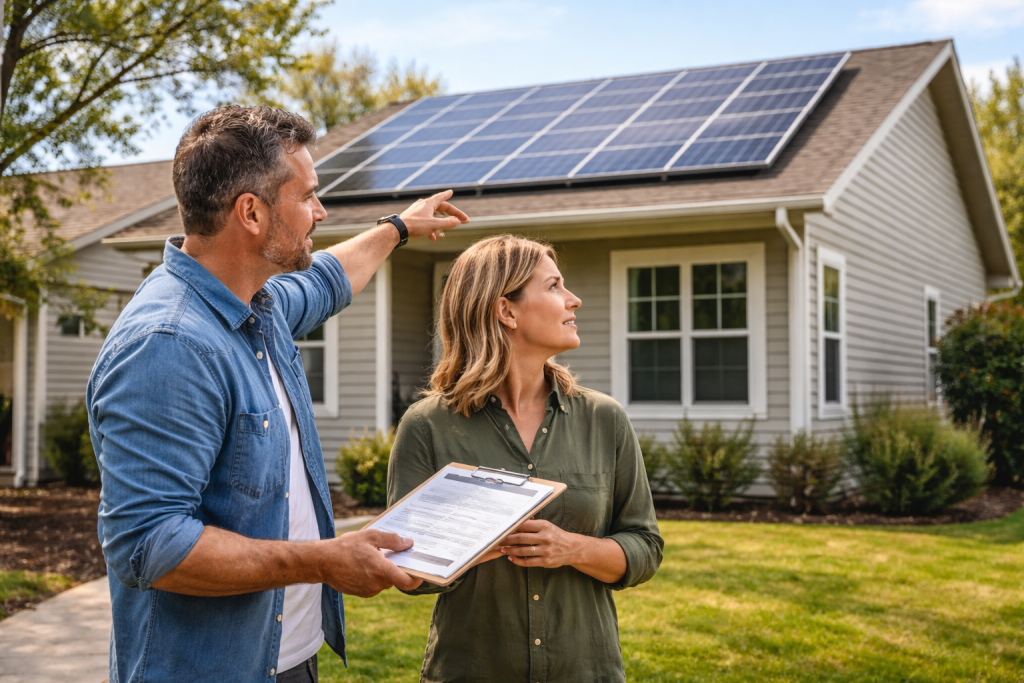

Yes, you almost always need a permit for solar panels before installing them on your home.
However, many homeowners feel confused because every city, state, and utility uses different rules.
As a result, even simple projects can feel overwhelming at first.
I’ve reviewed dozens of residential solar files, and most delays happen because one small form was missing.
As a result, knowing what to expect makes the entire process far less stressful.
Next, this guide moves through what permits are, explains their purpose, and outlines how the permitting process works specifically in the U.S.
Why Is a Permit for Solar Panels Required?
Permits exist to protect your home, your family, and the power grid.
Therefore, local governments and utilities use them to reduce safety risks and long-term problems.
- Electrical Safety (National Electrical Code)
The National Electrical Code (NEC) is the safety rulebook electricians follow.
Inspectors check that wires, breakers, and inverters meet these rules because faulty wiring can cause fires. - Structural Integrity
Inspectors review roof load plans to be sure your roof can hold the panels for decades.
This matters because added weight can cause leaks or long-term roof damage. - Fire Safety
Fire setback rules keep clear paths on the roof for firefighters.
As a result, crews can reach vents and skylights during emergencies. - Grid Interconnection
Utilities must approve how your system connects to the grid.
This prevents power from flowing in unsafe ways that could harm line workers.
Because of these checks, permits protect both homeowners and the wider community.
Solar Panel Permit Requirements
Although requirements vary by state, most cities ask for similar documents.
Therefore, having these ready early can save weeks of delay.
- System layout plans
These drawings show where panels sit on your roof or yard.
Cities need them to check spacing, roof edges, and fire access. - Electrical wiring diagrams
These show how power flows from panels to your breaker box.
Inspectors use them to verify that the system follows NEC safety rules. - Panel & inverter specifications
This list models numbers and ratings for each part.
Cities check them because approved equipment meets safety standards. - Roof load calculations
These prove your roof can support the weight of the panels.
Homeowners should care because weak roofs lead to costly repairs later. - Fire setback drawings
These show clear areas for firefighters to move on the roof.
As a result, emergency crews can work safely if a fire happens. - Utility interconnection forms
These go to your power company for grid approval.
Without them, your system cannot legally send power back to the grid.
Because of this paperwork, many homeowners let installers handle submissions.
Types of Permits You Might Need
More than one permit often applies to a solar project.
Therefore, each one covers a different safety area.
- Building Permit – roof safety
This checks how panels attach to the roof.
It prevents leaks and structural problems. - Electrical Permit – code compliance
This covers wiring, breakers, and grounding.
Inspectors make sure the system will not overload circuits. - Zoning Permit – placement rules
Some cities limit where panels can go.
This matters most for ground-mounted systems. - HOA Approval – legal authority of HOAs
Many neighborhoods have homeowner’s associations.
They can control how panels look, even though many states protect solar rights.
As a result, knowing which permits apply helps avoid last-minute issues.
Step-by-Step Permit Process
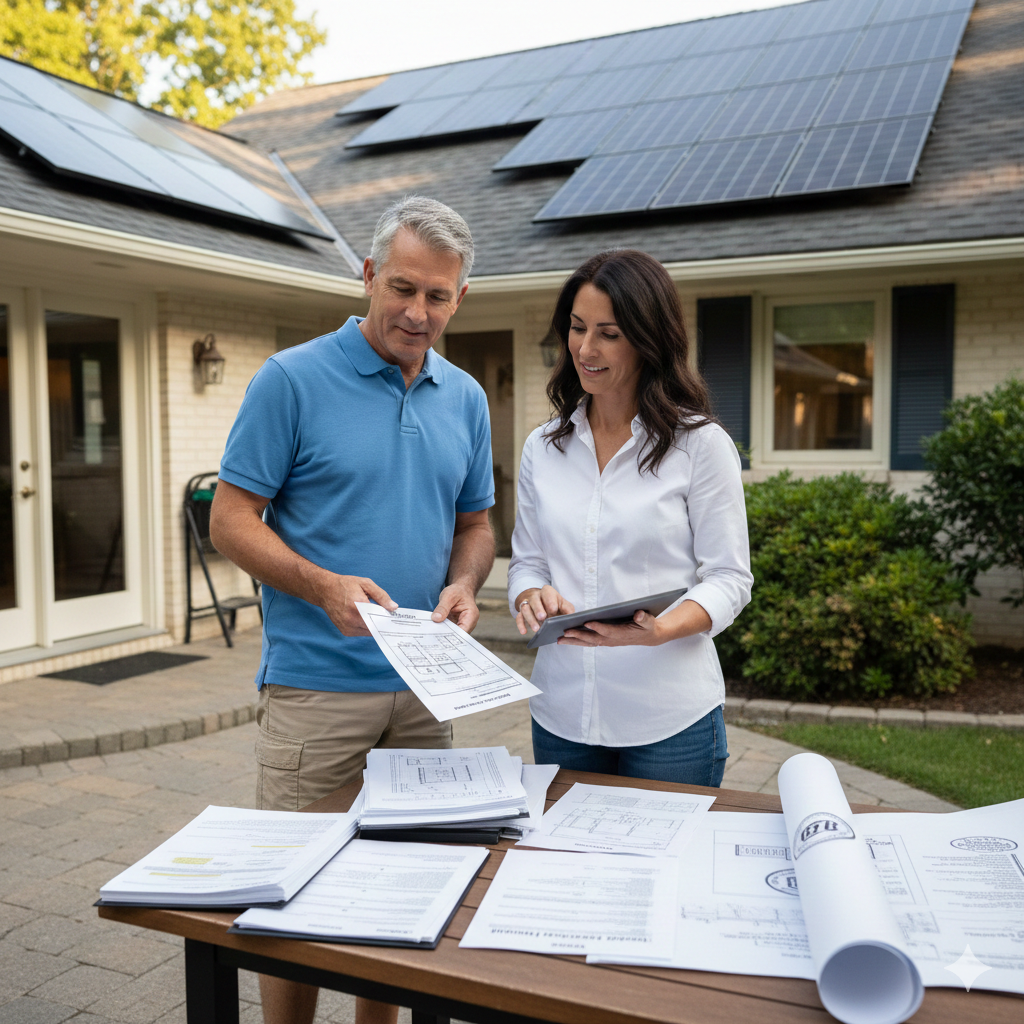
This is the typical path most U.S. homeowners follow.
However, local steps can change slightly.
- System design
A designer creates plans based on your roof and energy needs.
Cities need these drawings before they can review anything. - AHJ application
The Authority Having Jurisdiction (AHJ) is your local building office.
They review plans to check safety and zoning rules. - Utility net-metering request
You apply to your power company to connect to the grid.
This allows you to send extra power back and receive credits. - Engineering review
Engineers verify that the roof and wiring are safe.
I’ve seen projects stall when one missing stamp held up approval. - Inspection
Inspectors visit after installation.
They confirm the system matches the approved plans. - Permission to Operate (PTO)
The utility gives final approval to turn the system on.
Without PTO, you cannot legally use the system.
Because of this sequence, paperwork must stay accurate from start to finish.
State & City Differences Across the U.S.
There is no single national permit process.
Therefore, your location changes how fast and how much you pay.
- Fast states
California and Arizona use SolarAPP+, an online approval system.
Many permits there take only days instead of weeks. - Slower states
Pennsylvania and North Carolina rely on manual reviews.
As a result, approvals often take longer. - City differences
New York City has stricter fire and zoning rules.
Texas cities, on the other hand, often process permits faster. - Historic districts
Homes in protected areas need extra design reviews.
These rules protect neighborhood character.
Because of these factors, timelines and fees vary widely.
Special Permit Scenarios
Some setups need extra attention.
Therefore, these cases often confuse homeowners.
- Garages & sheds
Panels on detached buildings still need permits.
Cities must check those structures for safety. - Ground-mounted systems
Zoning and land-use rules often apply.
These prevent panels from blocking neighbors or property lines. - DIY solar installations
Homeowners must still submit plans and pass inspections.
Inspectors do not waive rules just because it is a personal project.
Because of this, every solar setup must follow local codes.
Costs & Timelines
Most permit costs are predictable.
However, delays can change final timelines.
| Permit Fees | $300–$600 |
| Approval Time | 2–8 weeks |
| Inspection | After installation |
Delays often happen because plans are incomplete.
Therefore, double-checking paperwork helps keep things moving.
Common Reasons Permits Get Rejected
Most rejections come from simple mistakes.
As a result, careful prep avoids frustration.
- Wrong equipment numbers
Model numbers must match the plans.
One typo can trigger a full resubmission. - Missing roof data
Load calculations must be included.
Inspectors cannot approve weak roofs. - Incomplete fire layouts
Setbacks must be clearly shown.
This protects emergency access.
Because of this, accuracy matters more than speed.
FAQs
Can I install solar without a permit?
No. Cities can fine you and force removal.
I’ve seen homeowners pay thousands to redo unpermitted work.
Does a permit for solar panels increase property taxes?
Usually no. Many states, like Texas and Florida, offer Solar Property Tax Exemptions, which prevent higher taxes.
For official rules, you can also check energy.gov, nrel.gov, and eia.gov for federal guidance.
Conclusion
A permit for solar panels is almost always required in the United States.
These permits protect your home, your safety, and the electric grid.
Although the rules change by state and city, the core process stays the same.
Most importantly, professional installers usually handle the paperwork for you.
However, homeowners should still understand what is being filed.
Because of this, never install solar without approved permits in place.